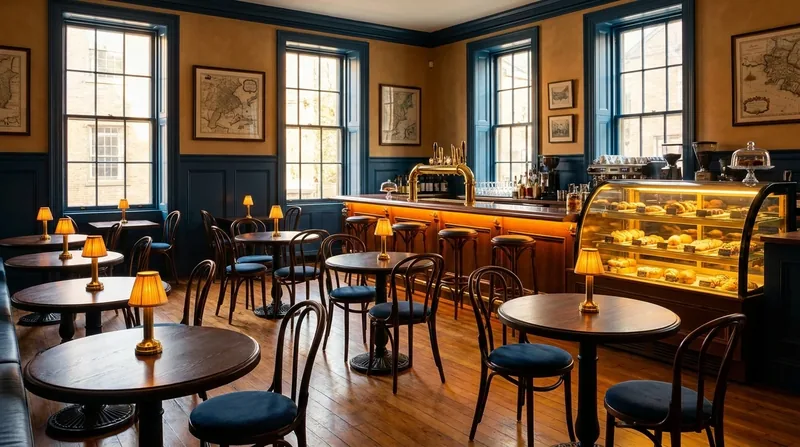
How to Start a Restaurant in Idaho: Health District License, Plan Review and Liquor Licenses
How to Start a Restaurant in Idaho: Health District License, Plan Review and Liquor Licenses
If you search for an idaho restaurant license, you will find conflicting answers. The short version: Idaho does not issue a statewide restaurant license. Your food establishment license comes from the public health district that covers your location. Your entity filing runs through the Idaho Secretary of State, your sales tax registration runs through the Idaho State Tax Commission, and your city handles local approvals and final sign-off. If you plan to serve alcohol, you will also deal with the Idaho State Police Alcohol Beverage Control (ABC) unit.
This guide lays out the order that works in practice. Plan for several months between forming your entity and opening day, and expect the health district and your city to set your schedule.
What You Need Before You Start
Gather these items before you file anything. Missing one of them is the most common reason a timeline slips.
- A business name that meets Idaho naming rules and is not already in use on the Secretary of State records.
- A registered agent with a physical Idaho street address. P.O. boxes are not accepted.
- A federal Employer Identification Number (EIN) from the IRS, which you will need for banking, payroll and tax registration.
- A signed lease or purchase agreement for the building, with the permitted use stated as a restaurant.
- A written zoning confirmation from your city planning office that restaurant use is allowed at the address.
- A scaled floor plan showing seating, the kitchen, prep areas, dish washing, handwashing sinks, restrooms, storage and equipment locations.
- An equipment list with make, model and specification sheets for refrigeration, cooking, hot holding and dish machines.
- A draft menu and a plan for how each menu item will be prepared, cooled, reheated and held.
- Owner identification and contact details for every member, officer and manager.
- A budget line for fees, including the state filing fees, the health license, any plan review fee and any liquor application costs.
Step 1: Choose and Register Your Business Entity
Most restaurant owners form a limited liability company (LLC). The LLC filing is made with the Idaho Secretary of State through SOSBiz (sosbiz.idaho.gov/forms/business). The Certificate of Organization costs $100 when filed online and $120 on paper.
Your name must include "limited liability company," "limited company," "LLC," "L.L.C.," "LC" or "L.C." Under Idaho Code 30-21-301, the name must also be distinguishable from existing, reserved and registered names on the Secretary of State records. Words like "LLC" or "Inc." do not count when the state tests whether a name is distinguishable. A name cannot falsely suggest government affiliation.
If you need time to secure a name, you can reserve it for 120 days for a $20 fee through the Secretary of State at sos.idaho.gov/business-forms.
Processing for standard filings is approximately 7 to 10 days. Expedited options are available. A $40 surcharge covers evidence of filing within 8 working hours, and a $100 surcharge covers same day service on filings submitted before 1:00 p.m. Mountain time.
Two more points matter for a restaurant. First, every entity must keep a registered agent in Idaho at all times. Second, the annual report is required every year, and Idaho lists its fee as no fee. It is due each year before the end of the month in which the Certificate of Organization became effective, starting one year after formation. Put that date on your calendar the day you file.
If you choose a corporation instead, the Articles of Incorporation carry the same $100 filing fee and the same annual report requirement. Talk to a CPA before choosing between an LLC and a corporation, because the tax treatment differs.
Step 2: Confirm What Your City Requires
Idaho has no state general business license. Registering your entity is a registration, not a license. Counties do not issue a general business license either. Local requirements come from your city, and they vary.
Some Idaho cities require a general business license or permit for every business that operates within their limits. Others license only specific activities, such as food service, alcohol, signage or outdoor seating. We cannot give you a reliable list of which cities do what, so call the city clerk or the planning department in the city where your restaurant will operate and ask three questions:
- Does the city require a general business license or permit for a restaurant?
- Does it license food service, alcohol, signage, outdoor seating or live entertainment separately?
- What is the fee for each, and what is the processing time?
Get the answers in writing. Then confirm the fee on the city's own page before you pay anything, because the amounts can change.
The Idaho Department of Commerce runs the Business Wizard at business.idaho.gov. It generates a checklist of the agencies and permits a specific activity needs. Use it as a starting point, then verify the local items with the city.
Step 3: Register for Sales Tax and Other Tax Accounts
Idaho's state sales tax rate is 6%, and it applies to restaurant meals. Idaho has no local sales tax outside voter-approved resort cities, so for most restaurant locations, the state rate is the rate to charge. Confirm the treatment of meals and any local tax questions with the Idaho State Tax Commission before you open.
Register through the Idaho Business Registration page at tax.idaho.gov/ibr. The registration gives you a sales tax permit number that you use to file returns. Ask the Tax Commission about any display requirement. The Tax Commission's main site is tax.idaho.gov.
Income tax works differently depending on your entity. Idaho has a flat 5.3% income tax for individuals. A default LLC is a pass-through entity, so members report Idaho income on their personal returns. An LLC that files a partnership or S corporation return owes the $10 permanent building fund tax. An LLC taxed as a C corporation pays the 5.3% business income tax plus the $10 permanent building fund tax. Have your CPA confirm which applies to you.
Step 4: Contact Your Health District Early
This is the step that most people get wrong, because they assume the state issues a restaurant license. It does not. Idaho's seven public health districts license restaurants and other food establishments. Find the district that covers your address, then call its environmental health division before you sign a lease if you can.
The fee structure is set by Idaho Code 39-1607, with a fee schedule effective January 1, 2022. For most food establishments, the maximum annual license fee is $200. The maximum is $250 when you hold more than two licenses on one premises under common ownership. Your district may also add a plan review and preoperational inspection fee of up to $100. Districts cannot charge other fees beyond what the statute authorizes. If a district bills you for something outside that structure, ask for the statutory basis in writing.
Plan review timing depends on the district. Central District Health asks for plan review about 30 days before you open, as of 2026. Other districts set their own timelines, so call yours and ask:
- What plan review documents do you require, and do you have a checklist?
- How many days before opening must the plan be submitted?
- What is the plan review and preoperational inspection fee?
- Do you require a certified food protection manager, and how many?
- Is a pre-application meeting available before I submit the full plan?
Idaho's retail food rules are in the Idaho Food Code, IDAPA 16.02.19. Read the sections on equipment, sinks, plumbing, hand sinks, cold holding, hot holding and cooking temperatures before you finalize your floor plan. Changing a finished kitchen costs far more than changing a drawing.
Step 5: Apply for the Liquor License, If You Will Serve Alcohol
Skip this step only if you will serve no alcohol at all. Liquor approval runs in a stack. The state license from the Idaho State Police ABC unit comes first, followed by the county and then the city. Confirm the exact order and paperwork for your application with ISP, because each layer depends on the one before it.
Quotas also matter. In many areas, the number of available liquor licenses is limited, and you may need to buy a license from an existing holder rather than apply for a new one. Check availability for your location before you sign a lease. Our liquor license guide covers the quota and application process in more detail.
Alcohol applications typically require background checks on owners and managers, so plan for that when you gather your ownership information.
Step 6: Build Out, Pass Inspections and Get City Sign-Off
Once the health district approves your plan, you can build out the space. Schedule inspections as the work progresses. Electrical, plumbing and mechanical work will need its own permits and inspections, and the health district will inspect the finished kitchen before it gives you a license.
Before you open, you need two city approvals. The first is city sign-off on the completed build-out, which confirms that the work meets the permits the city issued. The second is a certificate of occupancy, which confirms the building is safe and approved for restaurant use. Do not schedule a soft opening or print invitations until both are in hand.
Step 7: Get Your Health License and Open
After the final health inspection passes, pay the license fee and display the license where the public can see it. Confirm the license expiration date and mark the renewal on your calendar. The fee is annual, so the renewal cycle repeats every year.
Keep your annual report, sales tax filings, city license renewals and health license renewals on one shared calendar. Missing one of these is a common cause of penalties for a business that already has a working kitchen.
Common Mistakes to Avoid
- Assuming a state restaurant license exists. It does not. Your food license comes from the health district.
- Signing a lease before checking zoning. Get written zoning confirmation first, and make sure the lease allows restaurant use.
- Filing with the county for your assumed business name. Idaho's assumed business name, which Idaho calls a Certificate of Assumed Business Name, is filed with the Secretary of State. The fee is $25 online and $45 on paper, which includes a $20 manual data entry surcharge.
- Designing the kitchen before calling the health district. A floor plan that fails review means redrawing, rebuilding and waiting again.
- Missing the plan review window. Districts set their own timelines. Central District Health asks for plan review about 30 days before opening, but yours may differ.
- Paying fees that do not match the statute. Districts can charge only what Idaho Code 39-1607 authorizes, plus the plan review and preoperational inspection fee up to $100.
- Ignoring the registered agent. A missed agent notice can cause serious problems with your entity. Use an agent you can reach during business hours.
- Forgetting the liquor sequence. State, county and city approvals build on each other. A delay at one layer delays the rest.
What Results to Expect
Idaho's requirements are manageable for a prepared applicant, but they do not run on a single clock. Entity filing can take about 7 to 10 days with standard processing, and expedited service can shorten that. Health plan review may take several weeks once you submit a complete plan, and the timing depends on your district's workload. Your city may need additional time for permits and inspections.
A complete, well-organized packet may help you avoid resubmissions, which are often the biggest source of delay. Early contact with the health district and the city may help you identify requirements before you spend money on construction. Results vary by location, concept and how quickly you respond to agency questions, so build a schedule with buffer time rather than a single target opening date.
Next Steps
Start with the two calls that set everything else in motion. Contact the health district that covers your address, and contact the city clerk or planning office about zoning and any city license. Then file your entity with the Secretary of State, register for sales tax, and begin the liquor application if you need one. Keep a single folder with every receipt, approval and inspection report. You will need them for renewals, lender questions and future expansion.
For the Secretary of State forms and status checks, visit sos.idaho.gov and search active entities at sosbiz.idaho.gov/search/business. The Idaho Small Business Development Center (idahosbdc.org) offers free advising for owners who want a second set of eyes on their plan. The U.S. Small Business Administration's Boise district office is listed at sba.gov/district/boise.
Disclaimer: This article is informational content, not legal or tax advice. Fees, timelines and requirements change, and the details that apply to your restaurant depend on your location, ownership and concept. Confirm every figure with the named agency before you pay or sign anything. Because restaurant formation involves licensing, lease, liquor and tax questions, consult a qualified attorney and a CPA before making decisions.
Keep exploring: related Idaho guides
- How to Start a Food Truck in Idaho
- How to Start a Winery in Idaho
- How to Start a Food Truck in Coeur d'Alene
- How to Start a Bakery Business in Idaho
- Idaho Liquor License Guide
- How to Start an LLC in Idaho
- Idaho Business License
- How Much Does It Cost to Start a Business in Idaho
- All Idaho business types
- Every Idaho guide in one place