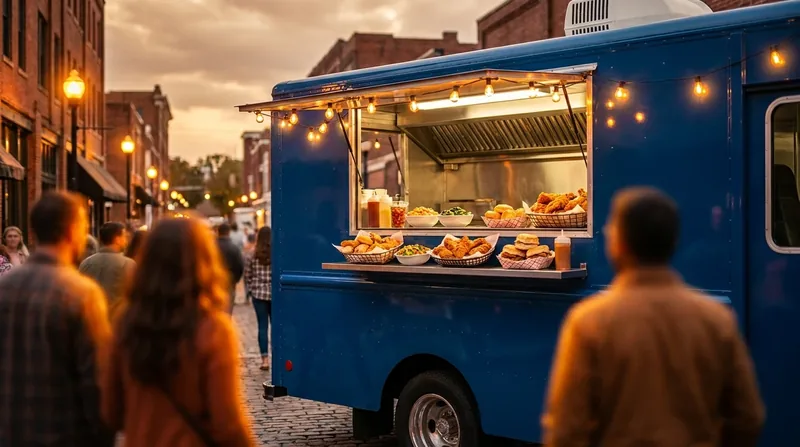
How to Start a Food Truck in Coeur d'Alene: Panhandle Health District and City Mobile Concession License
How to Start a Food Truck in Coeur d'Alene: Panhandle Health District and City Mobile Concession License
Starting a food truck in Coeur d'Alene means clearing two separate approvals before you sell a single taco: a mobile food license from Panhandle Health District, and a City of Coeur d'Alene license that controls how and where you operate. Many new operators search for a "coeur d'alene food truck permit" as if it were one document. It is not. Idaho has no statewide general business license, so the paperwork you need depends on your menu, your equipment, and where you plan to park.
This guide walks through the steps in the order most operators find works best. It covers the confirmed fees and flags the points you need to confirm directly with each agency. Use it as a planning roadmap, not a final checklist.
What You Need Before You Start
Gather these items before you file anything. Having them ready prevents the most common delays.
- A business name you have checked against the Idaho Secretary of State business search
- Your LLC certificate of organization, or the entity paperwork you plan to file
- An Idaho registered agent with a physical Idaho street address (P.O. boxes are not accepted)
- A federal Employer Identification Number (EIN) from the IRS
- A commissary agreement, or a clear plan for where the truck will be stocked, prepared, cleaned, and serviced
- The truck itself, or a build-out plan showing the equipment layout, water supply, and waste holding
- A written menu with ingredient sourcing and food prep methods
- A site plan, if you plan to operate inside a mobile food court
- A budget that includes license fees, plan review fees, sales tax obligations, and the annual report
- Vehicle registration and proof of insurance for the truck, which you should confirm both agencies will require
Step-by-Step: Launching Your Food Truck in Coeur d'Alene
Step 1: Confirm Which Licenses Your Truck Needs
Idaho does not issue a state business license. Registering your entity with the Idaho Secretary of State is a registration, not a license. Counties do not issue a general business license either. Cities handle this differently: some require a general license, while others license only specific activities. Coeur d'Alene regulates mobile concessions under City Code chapter 5.75, and that is the license most food truck operators need.
Run your activity through the Business Wizard at business.idaho.gov, which generates a checklist of the agencies and permits a specific activity needs. Then confirm that checklist with the City Clerk, because the wizard does not replace the city's own rules.
Step 2: Form Your Business Entity
Most food truck owners form a limited liability company (LLC). The Certificate of Organization (Limited Liability Company) costs $100 when filed online through SOSBiz and $120 on paper. Processing is typically 7 to 10 days from the filing date. If you need faster service, the Secretary of State lists a $40 surcharge for evidence of filing within 8 working hours, and a $100 surcharge for same day service on filings submitted before 1:00 p.m. Mountain time.
Your name must include "limited liability company," "limited company," "LLC," "L.L.C.," "L.C.," or "LC." It must also be distinguishable from names already on the Secretary of State's records, and it may not state or imply government affiliation. A name like "Coeur d'Alene City Eats" would likely draw an objection for that reason. If you need time to finalize branding, you can reserve a name for 120 days for $20.
If you sell under a brand that differs from your LLC name, you also need an assumed business name (the Idaho DBA). File it with the Idaho Secretary of State, not the county. It costs $25 online or $45 on paper, which includes a $20 manual data entry surcharge. An assumed business name stays active until you cancel it, so it is not renewed. Note that a DBA cannot serve as your registered agent.
The annual report is required every year. It is due before the end of the month in which your Certificate of Organization became effective, beginning one year after formation. The Secretary of State lists its fee as no fee, but the deadline is real, and missing it can put your standing at risk.
Step 3: Get Your EIN and Idaho Sales Tax Permit
Apply for an EIN with the IRS before you open a bank account or hire anyone. Then register for an Idaho sales tax permit through the Idaho State Tax Commission's business registration system at tax.idaho.gov/ibr. Idaho's state sales tax rate is 6%. Outside voter-approved resort cities, Idaho has no local sales tax, but confirm with the Tax Commission how your specific sales are treated before you set menu prices.
Your entity's tax treatment also matters. A default LLC is a pass-through entity, so its members report Idaho income on their personal returns at the flat 5.3% rate for 2025. An LLC filing a partnership or S corporation return owes the $10 permanent building fund tax. An LLC taxed as a C corporation pays the 5.3% business income tax plus that $10 tax. Have a CPA confirm which applies to you.
Step 4: Apply for the Panhandle Health District Mobile Food License
Panhandle Health District licenses mobile food establishments, so your truck must pass their review before you serve the public. The state-wide fee schedule shows $80 for a mobile food establishment without a commissary and $100 with one. A $100 plan review fee also applies. Those are the schedule amounts, so ask Panhandle Health for its current figures before you budget. Licenses renew annually.
Submit your plans early. Ask Panhandle Health to explain the order of plan review, inspection, and licensing, and to confirm what its plans must show, including your sinks, water supply, wastewater holding, food storage, and cooking equipment. Do not commit to a build-out or sign a commissary contract until you know what the plan reviewer expects. Changes made after equipment is installed are expensive.
Get your commissary arrangement in writing. Ask Panhandle Health what the commissary agreement must contain and whether it must be in place before plan approval. Keep a copy with your truck records.
Step 5: Apply for the City Mobile Concession License
The City Clerk issues the Mobile Concession license. It is required for mobile food and beverage sales, food carts, non-mobile concessions, and mobile retail. Apply through the city's Online Business Licensing system, and call the City Clerk at 208-769-2229 if you need help navigating it.
The city's current license fees were not confirmed. Older fee drafts circulate online, and they are out of date, so do not budget from them. Ask the Clerk for the current first-year fee and renewal fee, and ask whether the license renews on a fixed date or on your issue date.
When you call, ask four specific questions. Which license category fits my operation? Does Panhandle Health approval need to come first? Does the license tie me to specific locations? What insurance documentation does the city require? Write down the answers and the name of the person who gave them.
Step 6: Decide Whether You Need a Mobile Food Court License
If you plan to operate in a designated mobile food court with several vendors, you will need a separate Mobile Food Court license. It requires a site plan. Confirm with the City Clerk whether the court operator, you, or both must hold this license. Do not assume the court's own paperwork covers you.
Step 7: Add an Outdoor Eating Encroachment Permit If You Offer Seating
If you want customers to sit at tables, whether on a public sidewalk or on private property, you may need an outdoor eating encroachment permit. Ask the City Clerk whether your planned seating falls under it, and whether it needs to be approved before the truck opens. Seating decisions also affect your site plan and parking, so settle them before you apply for the other licenses.
Step 8: Confirm Where and How You May Park
Your license tells you what you can sell. Your location decides whether you can sell it on a given day. Ask the City Clerk where mobile concessions may operate in Coeur d'Alene, how long you may stay at one spot, and whether a private lot requires written permission from the property owner. Get the answers in writing before you sign a parking agreement or promote a regular location on social media.
Step 9: Time Your Launch Around Seasonal Demand
Coeur d'Alene has seasonal tourism demand, and your sales will likely follow that calendar. Many operators time their launch so that licenses, plan approval, and equipment are in hand before the busiest months. Confirm your season and event schedule before you order inventory, and avoid building your budget on a single peak period.
Step 10: Calendar Every Renewal and Filing
A food truck has several recurring obligations that run on different schedules. Put them all on one calendar from day one.
- Panhandle Health District mobile food license: renews annually
- City of Coeur d'Alene Mobile Concession license: confirm the renewal date with the City Clerk
- Idaho Secretary of State annual report: every year before the end of the month your Certificate of Organization became effective
- Idaho sales tax filings: follow the schedule assigned to your permit by the Tax Commission
- Your federal and Idaho income tax returns: confirm deadlines with your CPA
Timeline at a Glance
| Item | Agency | Timing or cost |
|---|---|---|
| LLC Certificate of Organization | Idaho Secretary of State | $100 online, $120 on paper; typically 7 to 10 days |
| Expedited LLC filing | Idaho Secretary of State | $40 surcharge (8 working hours) or $100 surcharge (same day, filed before 1:00 p.m. Mountain time) |
| Name reservation | Idaho Secretary of State | $20 for 120 days |
| Assumed business name (DBA) | Idaho Secretary of State | $25 online, $45 on paper |
| Mobile food license and plan review | Panhandle Health District | Schedule shows $80 or $100 license plus $100 plan review; confirm current amounts |
| Mobile Concession license | City of Coeur d'Alene City Clerk | Fee not verified; confirm with the Clerk at 208-769-2229 |
| Mobile Food Court license | City of Coeur d'Alene City Clerk | Requires a site plan; fee and timing to be confirmed with the Clerk |
| Outdoor eating encroachment permit | City of Coeur d'Alene City Clerk | Only if you offer seating; fee and timing to be confirmed |
Common Mistakes to Avoid
- Assuming Idaho issues a general business license. It does not. Your permits come from the city, the health district, and profession-specific agencies.
- Filing the DBA with the county. Idaho assumed business names are filed with the Secretary of State.
- Buying the truck before plan review. Panhandle Health may require changes that cost more after installation.
- Budgeting from old fee numbers. Online fee drafts can be years old. Get current figures from each agency.
- Using a P.O. box as your registered agent address. Idaho requires a physical street address.
- Missing the annual report. The fee is listed as no fee, but the filing deadline still applies every year.
- Choosing a name that implies government affiliation. Words that suggest the city or state can get your filing rejected.
- Forgetting the commissary paperwork. Keep the signed agreement with your permits.
Practical Tips
- Call Panhandle Health and the City Clerk before you order equipment, and write down each answer.
- Ask each agency which office to contact if your plans change, such as a new menu item that needs a different prep method.
- Keep one binder, physical or digital, with your entity filing, EIN, sales tax permit, health plan approval, city licenses, commissary agreement, and insurance certificate.
- Set your renewal reminders for at least 30 days before each due date.
- Ask the Idaho Small Business Development Center at idahosbdc.org for free or low-cost counseling on business planning and recordkeeping.
What Results to Expect
A complete, well-documented setup may help you open with fewer delays, avoid costly rework, and answer inspector or clerk questions more quickly. Clean records can also make renewals and tax filings more manageable. These are possible benefits, not guarantees.
Licenses do not produce sales. Your location, menu, pricing, and local demand will shape results far more than paperwork does. Plan for a slow start, and build your budget so the business can operate through seasonal dips. Any statement about food safety outcomes should come from your health authority, not from your marketing.
Official Resources
- Idaho Secretary of State: sos.idaho.gov
- File business forms through SOSBiz: sosbiz.idaho.gov/forms/business
- Search existing business names: sosbiz.idaho.gov/search/business
- Idaho State Tax Commission: tax.idaho.gov
- Idaho business registration and sales tax permit: tax.idaho.gov/ibr
- Business Wizard and checklists: business.idaho.gov
- Idaho Small Business Development Center: idahosbdc.org
- Panhandle Health District and City of Coeur d'Alene City Clerk (208-769-2229): contact by phone for current mobile food and licensing requirements
Important Disclaimer
This article is informational only. It is not legal, tax, or financial advice, and it does not create an attorney-client or CPA-client relationship. Fees, processing times, and rules change. Verify every figure with the agency that issues it before you file or budget. Because food trucks involve entity formation, tax obligations, health regulation, and local zoning or parking rules, consult a qualified Idaho attorney and a CPA before you commit money or sign contracts.
Keep exploring: related Idaho guides
- How to Start a Food Truck in Boise
- How to Start a Food Truck in Idaho
- How to Start a Coffee Shop Business in Idaho
- How to Start a Restaurant in Idaho
- Idaho Liquor License Guide
- How to Start an LLC in Idaho
- Idaho Business License
- How Much Does It Cost to Start a Business in Idaho
- All Idaho business types
- Every Idaho guide in one place