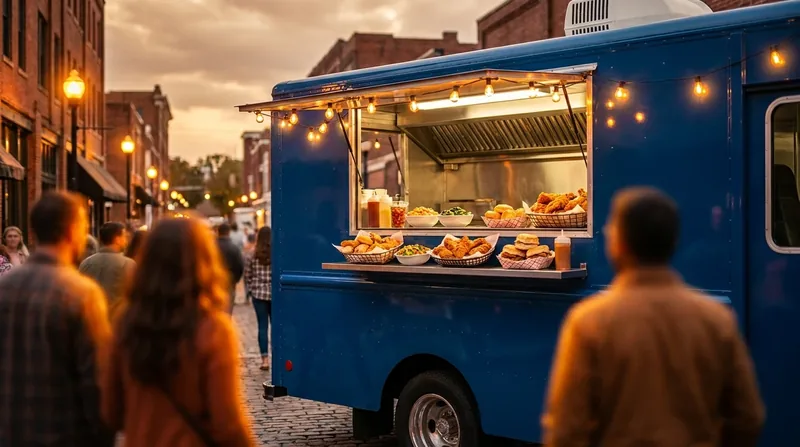
How to Start a Food Truck in Idaho: Mobile Food License, Health District and City Vendor Permits
How to Start a Food Truck in Idaho: Mobile Food License, Health District and City Vendor Permits
If you are searching for an Idaho food truck license, the first thing to know is that Idaho does not issue one statewide. Idaho has no state general business license, so registering your business with the Secretary of State is a registration, not a license. A food truck typically needs several separate approvals: an entity filed with the Secretary of State, a sales tax permit from the State Tax Commission, a mobile food establishment license from the health district where the truck is based, and, in some cities, a vendor or mobile food license from the city. This guide covers the order that works, what each step costs, and where operators usually get stuck.
This article is informational, not legal or tax advice. Fees and rules change, so confirm every figure with the agency named before you pay or file. For questions about entity structure, taxes, or contracts, talk with a qualified attorney or CPA.
What You Need Before You Start
Gather these items before you file anything. Most delays come from a missing document in steps two or three, not from the filings themselves.
- Your legal business name and one backup name, checked against the Secretary of State business search
- A registered agent with a physical Idaho street address (P.O. boxes are not accepted)
- A federal Employer Identification Number (EIN) or your Social Security number for tax registration
- A payment method for online filings
- Truck specifications: year, make, model, fuel type, and a floor plan showing sinks, water tanks, waste tanks, refrigeration, cooking equipment, and the serving window
- A commissary agreement or written plan for food storage, prep, and water and waste service, if you will not prepare everything on the truck
- A full menu listing every item and its ingredients, plus planned hours and operating locations
- A list of the cities and counties where you expect to work
Step 1: Form Your Business Entity with the Idaho Secretary of State
Most food truck owners form a limited liability company (LLC) to separate personal assets from business debts. File the Certificate of Organization (Limited Liability Company) through SOSBiz at sosbiz.idaho.gov/forms/business. The filing fee is $100 online and $120 on paper.
Name rules matter here. Under Idaho Code 30-21-302(d), your name must contain the phrase “limited liability company” or “limited company,” or one of the abbreviations “L.L.C.,” “LLC,” “L.C.,” or “LC.” “Ltd.” and “Co.” are acceptable short forms. Under Idaho Code 30-21-301, the name must be distinguishable from existing, reserved, and registered names on Secretary of State records, and the entity type word does not count toward that test. A name also cannot falsely suggest a government affiliation. Search the business search before you commit to a name, since a name that looks different on a truck wrap can still collide with a registered entity.
If you need to hold a name while you gather documents, you can reserve it for 120 days for a $20 fee through the Secretary of State business forms page.
Standard processing is approximately 7 to 10 days from filing, according to the Secretary of State. Expedited options exist. A $40 surcharge gets evidence of filing within 8 working hours, and a $100 surcharge gets same-day service on filings submitted before 1:00 p.m. Mountain time, under Idaho Code 30-21-214. Pay for speed only if you have a fixed launch date, because the health district and city steps often take longer than the entity filing.
Every entity must keep a registered agent in Idaho at all times. The agent can be an Idaho resident, a business authorized to do business in Idaho, a commercial registered agent, or you, as the owner, using an Idaho address. An assumed business name (DBA) cannot serve as the registered agent.
Step 2: Register an Assumed Business Name (DBA) if You Need One
If your truck will operate under a name other than the exact legal name on your LLC, file a Certificate of Assumed Business Name. In Idaho this is filed with the Secretary of State, statewide, not with the county clerk. Online filing costs $25. A paper filing costs $45, which includes a $20 manual data entry surcharge. The DBA does not expire and is not subject to renewal, though it stays active until you cancel it.
Do not file a DBA if your truck name matches your LLC name exactly. Filing one you do not need adds cost and another record to track. Forms are at sos.idaho.gov/business-forms.
Step 3: Register for Taxes with the State Tax Commission
Food sales are subject to Idaho sales tax, and you need a sales tax permit before you sell. Apply through the Idaho Business Registration page at tax.idaho.gov/ibr. The state sales tax rate is 6%. Confirm with the Idaho State Tax Commission how the rate applies to your specific menu, prepared food, catering, and event sales before you set your menu prices.
Idaho has no local sales tax outside voter-approved resort cities. If your route includes one of those cities, check its local tax separately before you plan prices there.
On the income side, Idaho has a flat 5.3% income tax for 2025. A default single-member or multi-member LLC is a pass-through entity, so owners report Idaho income on their personal returns. An LLC that files a partnership or S corporation return owes the $10 permanent building fund tax. An LLC taxed as a C corporation pays the 5.3% business income tax plus the $10 permanent building fund tax. Idaho has no franchise tax and no LLC-specific annual state tax. Choosing a tax classification is a decision to make with a CPA, not a form to fill out by default.
Step 4: Choose Your Base and Commissary Arrangement
Your health district is determined by where the truck is based, and that district licenses your truck. Choose your base before you apply, because the district you pick controls your fees, plan review, and inspections. A commissary is a licensed commercial kitchen or facility where a mobile unit stores food, gets water and waste service, and cleans equipment. Commissary rules come from the Idaho Food Code, IDAPA 16.02.19.
Get a written commissary agreement before you apply. Ask the district what the commissary must provide, how often the truck must return to it, and whether the commissary needs its own license. A commissary agreement that falls through after you buy a truck is one of the most expensive mistakes in this business.
Step 5: Apply for the Mobile Food Establishment License
Mobile food establishments are licensed by the health district where the truck is based. Under Idaho Code 39-1607(3), effective January 1, 2022, the annual license fee is $80 for a mobile food establishment without a commissary and $100 for one with a commissary.
Some older district pages still list $65 and $85. Those are pre-2020 amounts and are outdated. If you see them on a district page, ask the district to confirm the current figures in writing.
Districts may also charge a plan review fee of up to $100. Submit your truck floor plan, equipment list, menu, water and waste plan, and commissary agreement together so the reviewer can check them in one pass. Ask the district whether it wants plans reviewed before you buy or modify the truck. Changing equipment after a plan is approved can mean a second review and a second fee.
Find your district and its application forms through the Idaho health district system. Confirm the plan review timing and inspection process with that district, because these differ by district.
Step 6: Check City Vendor and Mobile Food Requirements
This is where Idaho gets local. Counties issue no general business license. Cities differ: some require a general business license or permit, and others license only specific activities such as mobile food vending or street vending. Do not assume one city's answer applies to the next city on your route.
As of 2026, Idaho Falls and Coeur d'Alene have city vendor or mobile food licenses. Boise ended its separate mobile eating and drinking license in 2024, but its City Clerk's list may still show vendor licenses, so confirm with the Boise City Clerk. Contact each city clerk to confirm the current fee, the application process, and whether your planned locations trigger the requirement. Also ask whether the city needs proof of your health district license before it will issue its own license, since that order affects your timeline.
For cities not listed here, call the city clerk before you sign a location agreement or accept a catering booking. Ask specifically whether the city requires a license for mobile food vending, for vending on public property, or for vending on private property with the owner's permission.
Step 7: Plan for Events and Operations Outside Your District
Your district license covers the district that licensed you. If you want to work in another health district, ask that district before you operate there. Do not assume your license travels with the truck.
For events that fall outside your normal route, your district may require a temporary food establishment permit. Temporary food establishment fees are $35 for one day, $45 for 2 to 3 days, and $80 for 4 or more days or for multiple events. Event organizers often ask for permit numbers in advance, so confirm the fee and timing with the district before you accept the booking.
Step 8: Stay Compliant After Launch
Launch is not the end of the paperwork. Calendar these recurring obligations from day one:
- Annual report: Required every year. It is due before the end of the month in which your Certificate of Organization became effective, beginning one year after formation. The fee is listed as no fee under Idaho Code 30-21-214.
- Registered agent: Keep the agent current. If you change agents or move, update the filing.
- Health district license: Renew annually before expiration, and call the district when you change your menu, equipment, or commissary.
- City licenses: Track each city's renewal date separately.
- Sales tax: File and remit on the schedule the State Tax Commission assigns to your permit.
What to Expect After You File
Based on the published processing estimates, the Secretary of State entity filing commonly takes about 7 to 10 days, and expedited filings can move faster. Health district and city timelines are set by each agency and can vary by season and workload, so build a buffer into any launch date. Once every approval is in hand, you may be able to operate legally in the districts and cities where you hold licenses. No timeline or approval is guaranteed.
If your marketing includes health, nutrition, or wellness claims about your food, keep them to statements you can support with documentation. Stick to plain descriptions of ingredients and preparation methods, and avoid implying that your food treats, prevents, or cures any condition.
Common Mistakes to Avoid
- Looking for a state food truck license. Idaho has none. The approval that matters most for your truck is the health district mobile food establishment license.
- Filing your DBA with the county. Assumed business names are filed with the Secretary of State.
- Using a P.O. box as your registered agent address. Idaho requires a physical street address.
- Naming a DBA as your registered agent. That is not permitted.
- Budgeting from outdated fee pages. Use the $80 and $100 mobile food license figures, not the $65 and $85 amounts.
- Operating outside your district without asking. Contact each district before you work there.
- Assuming one city's rules apply everywhere. Boise, Idaho Falls, and Coeur d'Alene have their own requirements, and other cities may differ.
- Treating the commissary as an afterthought. Get a signed agreement before you apply for the district license.
- Choosing a name that is too close to an existing one. Adding “LLC” does not make a name distinguishable.
- Missing the annual report. It is required every year even though there is no fee.
Practical Tips
- Reserve your name early if you plan to order branded wraps or signage before filing.
- Get the district's plan review before buying equipment. Equipment changes after approval can cost more than the plan review fee.
- Build a launch calendar that puts the entity filing first, then the sales tax permit, the district license, and the city licenses, with buffer days between each.
- Keep a single folder with filed documents, receipts, approval letters, renewal dates, and the commissary agreement.
- Use the Idaho Small Business Development Center at idahosbdc.org for free business planning help before you commit to a launch date.
- Use the Business Wizard at business.idaho.gov to generate a checklist of the agencies and permits your activity needs.
When to Get Professional Help
Simple sole-operator trucks in one district and one city can often be set up by the owner. Get professional advice when you have employees, multiple trucks, a partner, a commissary you do not control, catering contracts with indemnity terms, or a plan to operate across several health districts. An attorney can advise on entity structure and contracts, and a CPA can advise on the tax classification and the sales tax treatment of your menu.
This article is informational only and is not legal or tax advice. Confirm every fee, deadline, and requirement with the Idaho Secretary of State, the Idaho State Tax Commission, your health district, and each city clerk before you act.
Keep exploring: related Idaho guides
- How to Start a Food Truck in Coeur d'Alene
- How to Start a Restaurant in Idaho
- How to Start a Food Truck in Boise
- How to Start a Winery in Idaho
- Idaho Liquor License Guide
- How to Start an LLC in Idaho
- Idaho Business License
- How Much Does It Cost to Start a Business in Idaho
- All Idaho business types
- Every Idaho guide in one place