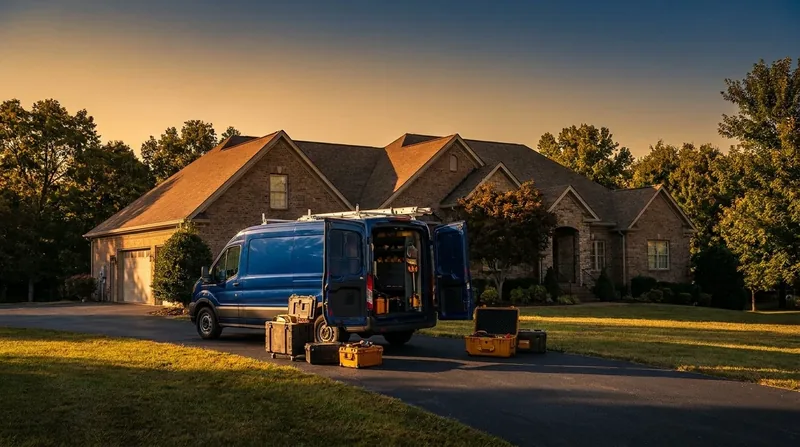
How to Start a Septic Installation or Pumping Business in Idaho: Health District Licenses by District
How to Start a Septic Installation or Pumping Business in Idaho: Health District Licenses by District
If you want to install septic systems or pump septic tanks in Idaho, the license that matters most comes from a public health district, not the state and not your county. Idaho's seven public health districts license septic installers under Department of Environmental Quality rules (IDAPA 58.01.03). Once you hold a license, you can get your installations permitted and inspected. This guide walks through the steps from forming your business to keeping your license current, with the fees we can confirm and the ones you will need to check with your district.
Informational content only: This article is not legal or tax advice. Septic rules change, and each district sets its own fee schedule. Confirm every number with the agency before you spend money, and talk with a qualified attorney or CPA about your entity choice and tax setup.
What You Need Before You Start
Gather these items before you file anything. Most of the delays new installers run into come from missing one of them.
- A business plan that states your scope. Decide whether you will install, pump, or do both, and which areas you will serve. Your answer determines which license and permits you need.
- A legal name and an Idaho registered agent address. The agent needs a physical Idaho street address. A P.O. box will not work.
- A budget for every fee. Plan for Secretary of State filing fees, the district license fee, a surety bond premium, and per-job permit fees.
- Access to the Environmental Health Portal. Each district takes applications through its own portal, so create your account early.
- Study time for the DEQ installer exam. You must pass this exam before you can be licensed.
- A list of your tax obligations. Idaho has a flat 5.3% income tax and a 6% state sales tax. Local sales tax applies only in voter-approved resort cities.
Step 1: Decide Whether You Are Installing, Pumping, or Both
Installers and pumpers face different licensing paths, so pick your focus before you pick a district.
Septic installer licenses come from the health district and come in two classes, Basic and Complex. Each district defines which systems fall into each class, so read the scope language in your district's rules before you choose a class. Service Provider status is a separate designation that requires a Complex license (see Step 5).
Pumping is where the rules vary most. Southwest District Health also licenses pumper trucks, but you should not assume every district works the same way. Ask your district whether it licenses pumpers and what it requires before you buy a truck.
Step 2: Understand the Seven-District System and Choose Yours
You apply to one health district, and a license from any district can be used statewide. You do not have to be licensed by the district where your office sits, so you can compare districts on cost and service.
Fees differ by district. Eastern Idaho Public Health's 2026 schedule lists an installer license at $50 for Basic and $100 for Complex. Check Southwest District Health, Central District Health, and your own district for current amounts, because the figures above are one district's schedule and may change. When you call, ask how each district handles applications, exam scheduling, and inspection requests. Those details affect your first-year timeline more than a $50 difference in license fees.
Step 3: Form Your Business Entity
Idaho has no state general business license. Registering a business entity with the Idaho Secretary of State is a registration, not a license, and it does not replace your septic license. Many installers form an LLC because it separates personal and business liability, but the choice is yours and worth discussing with a CPA or attorney.
To form an LLC, file a Certificate of Organization (Limited Liability Company). The fee is $100 when you file online through SOSBiz at https://sosbiz.idaho.gov/forms/business/ and $120 on paper. Business filings are processed in approximately 7 to 10 days. If you need faster service, expedited options carry a $40 surcharge for evidence of filing within 8 working hours, or a $100 surcharge for same-day service on filings submitted before 1:00 p.m. Mountain time.
Your name must include a required phrase such as "limited liability company," "limited company," "LLC," "L.L.C.," "L.C.," or "LC." It must also be distinguishable from names already on the Secretary of State's records. Avoid any name that suggests government affiliation.
Two recurring duties come next. First, you must keep a registered agent with a physical Idaho address. Second, you must file an annual report every year. The first report is due before the end of the month in which your Certificate of Organization became effective, starting one year after formation, and the state lists the annual report fee as no fee. A missed annual report is one of the easiest ways to fall out of good standing, so put it on your calendar the day you file.
If you form a corporation instead, the Articles of Incorporation (General Business) carry a $100 filing fee and the same annual report requirement.
Step 4: File a Business Name (DBA) Only If You Need One
If you will operate under a name other than your registered legal name, file a Certificate of Assumed Business Name. This is the Idaho DBA, and it is filed with the Idaho Secretary of State, not your county. The fee is $25 when filed online and $45 on paper, which includes a $20 manual data entry surcharge. An assumed business name stays active until you cancel it, so there is no renewal. A DBA cannot serve as your registered agent.
If you want to hold a name while you finish paperwork, you can reserve a name for 120 days for a $20 fee. Forms and the reservation process are at https://sos.idaho.gov/business-forms/.
Step 5: Prepare for and Pass the DEQ Installer Exam
Every applicant must pass the DEQ installer exam under the septic rules. Contact the health district you plan to apply through to confirm how to register for the exam, which study materials it recommends, and whether your scheduled exam date fits your business plan. Do not assume the exam is a formality. Study the rules on system design, site evaluation, and installation practice, because your license depends on passing.
If you plan to pursue Service Provider status, you also need a Complex license and a manufacturer confirmation letter. Start that conversation with the manufacturer early, since it can take time, and confirm the letter's requirements with your district.
Step 6: Arrange a Surety Bond
Every applicant must file a surety bond. The amount depends on your license class:
- Basic license: $10,000 surety bond
- Complex license or Service Provider: $30,000 surety bond
You pay a premium to a surety company, which is usually a percentage of the bond amount. Ask several surety agents for quotes, and ask how long underwriting takes. Your premium depends on your credit and business history, so a clean credit file can lower what you pay. Confirm the bond form the district requires before you buy the bond, because a bond with the wrong form or amount can hold up your application.
Step 7: Apply Through the Environmental Health Portal and Pay the District Fee
Submit your application through the Environmental Health Portal of the district you chose. Upload or provide your exam result, your bond, your entity documents, and any other materials the district requires. Pay the district fee at submission, and keep the receipt.
Before you submit, read the checklist on the portal and in the district's rules. A mismatch between your legal name on the bond and on the Secretary of State filing is a common cause of returned applications, so compare every document side by side.
Step 8: Plan for Permits and Inspections on Every Job
A license lets you work, but it does not cover each job. Each septic system needs its own individual septic permit, and that permit carries its own fee. Eastern Idaho Public Health's 2026 schedule lists an individual septic permit at $900 for a new system, an expansion, or a repair. Other districts set their own permit fees, so check your district before you quote a customer.
Understand this rule: no license means no inspection. A district will not inspect work done by an installer who lacks a valid license, so unlicensed work cannot be approved. Confirm with your district who files the permit application on a given job, because the answer can differ between districts and between installers and property owners.
Step 9: If You Pump, Check Your District's Pumper Rules
Southwest District Health licenses pumper trucks. Its requirements include an annual license, renewal by February 28, a vehicle inspection, and a site disposal approval form for each disposal location you plan to use. Confirm the current pumper license fee with Southwest District Health, because it is not a figure this guide can state.
If your business is in another district, call that district and ask three questions: whether it licenses pumper trucks, what vehicle inspection it requires, and how it approves disposal sites. Do not buy a truck or sign a disposal contract until you have those answers in writing.
Step 10: Check City, Contractor, and Sales Tax Requirements
Local and state requirements sit alongside your septic license, and they are easy to overlook.
- City licenses. Some Idaho cities require a general business license or permit, and others license only specific activities. Check the city clerk where you will work and ask whether septic installation or pumping requires a city license. Counties do not issue a general business license, but confirm that with the county clerk too.
- Contractor registration. Idaho has no statewide general contractor license. Contractors register with the Idaho Contractors Board at the Division of Occupational and Professional Licenses (DOPL). Ask whether that registration applies to your work in addition to your district license.
- Sales tax. The state sales tax rate is 6%. Whether your services or materials are taxable depends on how you bill, so confirm your treatment with the Idaho State Tax Commission at https://tax.idaho.gov/. If you owe sales tax, you will need a sales tax permit, which the commission explains at https://tax.idaho.gov/ibr.
- Income tax. Idaho's income tax is a flat 5.3%. A default LLC is a pass-through entity, so its members report Idaho income on personal returns. An LLC that files a partnership or S corporation return owes the $10 permanent building fund tax. Your CPA should confirm how your entity is taxed.
The Idaho Small Business Development Center offers free counseling for many business owners. Find your nearest office at https://idahosbdc.org/.
Step 11: Keep Your License and Entity Current
Your septic license renews every year. Installers must also complete continuing education every 3 years to stay licensed. Set reminders for three dates: your license renewal, your continuing education deadline, and your Secretary of State annual report. If you pump, add your pumper truck renewal. In Southwest District Health's program, that renewal is due by February 28.
Common Mistakes to Avoid
- Assuming Idaho requires a state business license. It does not. Registration with the Secretary of State is a registration, and your septic license comes from a health district.
- Filing a DBA with the county. Assumed business names are filed with the Idaho Secretary of State.
- Using a P.O. box as your registered agent address. The agent needs a physical Idaho street address.
- Assuming one district's fees apply everywhere. Fees differ by district, so confirm each figure with the agency.
- Buying the wrong bond. A Basic license requires $10,000. A Complex license or Service Provider status requires $30,000.
- Seeking Service Provider status too early. You need a Complex license and a manufacturer confirmation letter first.
- Starting a job before the permit is approved. Each system needs its own individual septic permit, and no license means no inspection.
- Missing the annual report. The Secretary of State requires one every year, starting one year after formation.
Tips for a Smoother Start
- Call the district before you apply. Ask about exam dates, portal setup, and the documents it wants before you pay anything.
- Get bond quotes early. Underwriting can hold up your application, so start while you study.
- Keep a permit log. Record every permit number, fee, and inspection date. Your customers and your district will both ask for them.
- Ask about the Service Provider path now. If manufacturer relationships matter to your business, plan the Complex license around them from the start.
- Keep copies of everything. Save your filings, receipts, bond, and license in one folder.
What Results to Expect
A complete application that matches your entity records, bond, and exam result may move through the district process with fewer returns. Once licensed, you may be able to perform permitted installations in any Idaho district, subject to each district's rules and the permits each job requires. Timelines vary with exam scheduling, bond approval, and district workload, so the path from first filing to first permitted job can take longer than you expect. Build a cash reserve for the fees, bond premium, and the weeks you may spend waiting for approvals.
No checklist guarantees a license on a set date. Your results depend on your application quality, your exam performance, and your district's current processing schedule.
Next Steps
Start with the decisions only you can make: whether you will install, pump, or both, and which district fits your service area. Then file your entity with the Idaho Secretary of State, open your district portal account, and book your exam. Before you quote a customer, confirm the permit fee and the inspection process with the district where the job sits.
For any question about liability, your entity structure, or your tax treatment, consult a qualified attorney or CPA. For questions about your septic license, bond, exam, or permits, contact the health district directly. This article is informational, not legal or tax advice, and it cannot replace the rules your district enforces.
Keep exploring: related Idaho guides
- How to Start a Public Works Contracting Business in Idaho
- How to Start an Electrician Business in Idaho
- How to Start a Plumbing Business in Idaho
- How to Start an HVAC Business in Idaho
- Idaho Contractor Registration
- How to Start an LLC in Idaho
- Idaho Business License
- How Much Does It Cost to Start a Business in Idaho
- All Idaho business types
- Every Idaho guide in one place